Dhamargava Kalpa Adhyaya: Difference between revisions
| Line 413: | Line 413: | ||
=== Further reading === | === Further reading === | ||
</div> | |||
== References == | == References == | ||
Revision as of 17:24, 23 September 2020
Kalpa Sthana Chapter 4.Pharmaceutical preparations of Dhamargava
| Section/Chapter | Kalpa Sthana Chapter 4 |
|---|---|
| Preceding Chapter | Ikshvaku Kalpa Adhyaya |
| Succeeding Chapter | Vatsaka Kalpa Adhyaya |
| Other Sections | Sutra Sthana, Nidana Sthana, Vimana Sthana, Sharira Sthana, Indriya Sthana, Chikitsa Sthana, Siddhi Sthana |
| Translator and commentator | Dwivedi K.N.,Sharma P. |
| Reviewer | Sawant B., Nishteswar K. |
| Editor | Nishteswar K., Sawant B. |
| Date of publication | December 17, 2018 |
Abstract
This chapter describes the use of dhamargava (Luffa cylindrica) for the purpose of inducing vamana (emesis). For this, its tender leaves, fruits and flowers are used. Total 60 preparations by using different medium like milk, juice of cow dung, horse dung, ghee, alcohol and decoction of various drugs like dhanyaka, tumburu etc. In this reference vati (pill) is prepared of the size of kola (jujuba). In one preparation emesis is induced after inhaling the powdered fruit sprinkled over the flower of water lily etc. Dhamargava is used to treat gara visha (poisoning), gulma(Lump in abdomen), udara roga ( swellings in abdomen including ascitis), kasa (cough), mano vikara (mental disorders) and various chronic and deep seated diseases.
Keywords: Dhamargava, Vamana, Luffa cylindrica, Gara visha.
Introduction
Dhamargava is a vamaka (emetic) drug. Its synonyms are karkotaki, kothaphala, mahajalini and rajakoshataki. Its tender leaves, flowers and fruits are used for inducing vamana (emesis). Two types of dhamargava are found one is tikta (bitter) and other madhura (sweet). Tikta variety is wild and used as aushadha (medicine). Madhura variety is used as shaka (vegetable).[1]Predominant mahabhuta in vamaka drugs are agni and vayu. By its ubhaytobhagahara (upper and lower) prabhava it is vamaka in nature.
Dhamargava is one of nineteen phalini dravyas. [Cha. Sa.Sutra Sthana 1/82] It is used in vamana and asthapana basti.[Cha.Sa. Sutra Sthana 1/85] It is also explained in vamaka dravyas.[Cha. Sa. Sutra Sthana 2/7]. It is used as drug of pakvashaya shodhana basti. [Cha. Sa. Sidhi Sthana 10/25-27]
Rishi Gautam gives his opinion that dhamargava is best drug because of its kapha-pitta nashaka property.[ Cha. Sa. Siddhi Sthana 11/7]]. According to Maharshi Atreya fruit of dhamargava is best for pandu (anemia) roga.[Cha. Sa. Siddhi Sthana 11/12]
Latin name: Luffa cylindrica (Linn.) M.J. Roem.
Family: Cucurbitaceae
Synonyms: Luffa aegyptiaca Mill., Luffa pentandra Roxb.[2]
Sanskrit synonyms: Rajakoshataki, dirgha pattolika.[3]
English name: Sponge gourd, Smooth luffa.
Botanical Description:
Monoecious, climbing to a considerable height; stems stout, 5- angled, twisted, glabrous or slightly pubescent, often scabrous at the angles. Tendrils usually 3-fid. Leaves orbicular – reniform in outline, 10-20cm. long, often broader than long, palmately 5- (rarely 7) lobed, the lobes acute or acuminate, lobulate and distantly denticulate. Petioles 2.5-10 cm. long, angular slightly scabrous. Male flowers in axillary 4-20, flowered racemes, usually crowded near the top of the raceme. Stamens 5, distinct. Female flowers solitary, usually from the same axils as the males; peduncles stout, 2.5-7.5 cm. long. Fruit 12.5- 30 cm. long cylindric or somewhat trigonous, blunt at the end, marked with longitudinal lines. Seeds black or grey, 10 by 6mm, much compressed, narrowly winged, smooth or slightly tuberculate.[4]
-
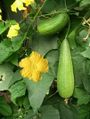 Luffa Cylindrica with Fruit & Flower
 -
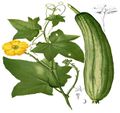 Luffa Cylindrica - 2
 -
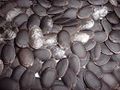 Luffa Seeds


Distribution: Cultivated throughout the greater part of India, as well as in Africa and America, believed to be indigenous to India.
- Rasa: Tikta
- Guna: Laghu, Ruksha, Tikshna
- Veerya: Ushna
- Vipaka: Katu
- Prabhava: Ubhaytobhagahara.[5]
- Actions and uses: Apakva phala is used for mutrajanana (diuretic) and stanyajanan (glactagogue). Pakva phala is kriminashaka (anthelmintic), and vatanulomaka (carminative). Its swarasa is virechaka (purgative). The mature seeds are vamaka (emetic).
Chemical Constituents: A substance like Colocynthine extract and one Luffein extract is found in it. In seeds fixed oil is found, one bitter substance and saponin is found. The fruit contains triterpenoid saponins: lucyosides A, B, C, D, E, F, G, H, I, J, K, L, M.
Sanskrit Text, Transliteration with English Translation
अथातो धामार्गवकल्पं व्याख्यास्यामः||१||
इति ह स्माह भगवानात्रेयः||२||
athātō dhāmārgavakalpaṁ vyākhyāsyāmaḥ||1||
iti ha smāha bhagavānātrēyaḥ||2||
athAto dhAmArgavakalpaM vyAkhyAsyAmaH||1||
iti ha smAha bhagavAnAtreyaH||2||
Now we shall expound the chapter "Dhamargava kalpa" (Pharmaceutical preparations of Dhamargava). Thus said Lord Atreya.[1-2]
Note: Dhamargava is sponge gourd.
Synonyms
कर्कोटकी कोठफला महाजालिनिरेव च|
धामार्गवस्य पर्याया राजकोशातकी तथा||३||
karkōṭakī kōṭhaphalā mahājālinirēva ca|
dhāmārgavasya paryāyā rājakōśātakī tathā||3||
karkoTakI koThaphalA mahAjAlinireva ca|
dhAmArgavasya paryAyA rAjakoshAtakI tathA||3||
Karkotaki, kothaphala, mahajalini and rajakosataki are the synonyms of dhamargava.[3]
Indications
गरे गुल्मोदरे कासे वाते श्लेष्माशयस्थिते|
कफे च कण्ठवक्रस्थे कफसञ्चयजेषु च||४||
रोगेष्वेषु प्रयोज्यं स्यात् स्थिराश्च गुरवश्च ये
फलं पुष्पं प्रवालं च विधिना तस्य संहरेत्||५||
garē gulmōdarē kāsē vātē ślēṣmāśayasthitē|
kaphē ca kaṇṭhavakrasthē kaphasañcayajēṣu ca||4||
rōgēṣvēṣu prayōjyaṁ syāt sthirāśca guravaśca yē
phalaṁ puṣpaṁ pravālaṁ ca vidhinā tasya saṁharēt||5||
gare gulmodare kAse vAte shleShmAshayasthite|
kaphe ca kaNThavakrasthe kaphasa~jcayajeShu ca||4||
rogeShveShu prayojyaM syAt sthirAshca guravashca ye|5|
phalaM puShpaM pravAlaM ca vidhinA tasya saMharet||5||
It should be used in conditions of gara (artificial poison), gulma, udara (GIT problems), kasa (cough), vata situated in the seat of kapha, kapha located in throat and mouth, diseases caused by accumulation of kapha and other stable and severe diseases.[4]
Fruits, flowers and tender leaves of the plant should be collected by the method said earlier. [5]
Different preparations
प्रवालस्वरसं शुष्कं कृत्वा च गुलिकाः पृथक्|
कोविदारादिभिः पेयाः कषायैर्मधुकस्य च||६||
pravālasvarasaṁ śuṣkaṁ kr̥tvā ca gulikāḥ pr̥thak|
kōvidārādibhiḥ pēyāḥ kaṣāyairmadhukasya ca||6||
pravAlasvarasaM shuShkaM kRutvA ca gulikAH pRuthak|
kovidArAdibhiH peyAH kaShAyairmadhukasya ca||6||
The juice of tender leaves is dried and made into pills which should be administered along with the decoction prepared out of any one of the drug from kovidaradi gana or madhuka (Glycyrrhiza glabra Linn.) [6]
- Note: Kovidaradi gana: Kovidaradi drugs include rakta kanchanara (Bauhinia variegata Linn.), shweta kanchanara (Bauhinia purpurea Linn.), kadamba (Anthocephalus indicus Miq.), jalaveta (Salix tetrasperma), kundaru (Boswellia serrata Roxb.), shanapushpi (Crotolaria verrucosa Linn.), madara (Calotropis procera Ait. R. Br.), apamarga (Achyranthes aspera Linn.). Total nine preparations are enlisted depending on nine decoction prepared. Out of which eight decoctions are prepared from each eight drugs of kovidaradi gana and one decoction prepared from madhuka (Glycyrrhiza glabra Linn).
पुष्पादिषु पयोयोगाश्चत्वारः पञ्चमी सुरा| पूर्ववत्...|७|
puṣpādiṣu payōyōgāścatvāraḥ pañcamī surā| pūrvavat...|7|
puShpAdiShu payoyogAshcatvAraH pa~jcamI surA| pUrvavat...|7|
Four preparations are of milk using flower etc. and the fifth one employs wine as said earlier. [7]
... जीर्णशुष्काणामतः कल्पः प्रवक्ष्यते||७||
मधुकस्य कषायेण बीजकण्ठोद्धृतं फलम्|
सगुडं व्युषितं रात्रिं कोविदारादिभिस्तथा||८||
दद्याद्गुल्मोदरार्तेभ्यो ये चाप्यन्ये कफामयाः|९|
दद्यादन्नेन संयुक्तं छर्दिहृद्रोगशान्तये||९||
... jīrṇaśuṣkāṇāmataḥ kalpaḥ pravakṣyatē||7||
madhukasya kaṣāyēṇa bījakaṇṭhōddhr̥taṁ phalam|
saguḍaṁ vyuṣitaṁ rātriṁ kōvidārādibhistathā||8||
dadyādgulmōdarārtēbhyō yē cāpyanyē kaphāmayāḥ|9|
dadyādannēna saṁyuktaṁ chardihr̥drōgaśāntayē||9||
... jIrNashuShkANAmataH kalpaH pravakShyate||7||
madhukasya kaShAyeNa bIjakaNThoddhRutaM phalam|
saguDaM vyuShitaM rAtriM kovidArAdibhistathA||8||
dadyAdgulmodarArtebhyo ye cApyanye kaphAmayAH|9|
dadyAdannena saMyuktaM chardihRudrogashAntaye||9||
Now, I would say the preparations of over ripened and dry fruits. The meshy /fibrous fruit core containing seeds should be taken out and the fruit should be stuffed with jiggery for the whole night. Next morning it should be given with the decoction of madhuka or any one of the kovidaradi drugs in the ailments like gulma, udara and the disorders of kapha.[7-8]
The fruit should be given mixed with food to alleviate vomiting and heart disease. [9]
Note: Collection of fruits: Fruits of dhamargava are plucked in spring or autumn season when there are abundant flowers that are growing on flat, even lands that are well nurtured by the kusha and rohisa. These plants should not be grown directly in sun, and neither along the river bank nor has chasms and crevices or anthills. The fruits themselves ought to be fully developed, ripen and with their juice well formed. A wise physician picking up such fruits should place them covered in a granary of yava or that of the husks for seven nights. (Bhela Samhita) [6]
चूर्णैर्वाऽप्युत्पलादीनि भावितानि प्रभूतशः|
रसक्षीरयवाग्वादितृप्तो घ्रात्वा वमेत् सुखम्||१०||
cūrṇairvā'pyutpalādīni bhāvitāni prabhūtaśaḥ|
rasakṣīrayavāgvāditr̥ptō ghrātvā vamēt sukham||10||
cUrNairvA~apyutpalAdIni bhAvitAni prabhUtashaH|
rasakShIrayavAgvAditRupto ghrAtvA vamet sukham||10||
One after being saturated with meat soup, milk, gruel etc. vomits easily by inhaling the flowers of water lily etc. impregnated profusely with the fine powder of dhamargava fruits.[10]
चूर्णीकृतस्य वर्तिं वा कृत्वा बदरसम्मिताम्|
विनीयाञ्जलिमात्रे तु पिबेद्गोऽश्वशकृद्रसे ||११||
पृषतर्ष्यकुरङ्गाह्वगजोष्ट्राश्वतराविके|
श्वदंष्ट्रखरखङ्गानां चैवं पेया शकृद्रसे ||१२||
cūrṇīkr̥tasya vartiṁ vā kr̥tvā badarasammitām|
vinīyāñjalimātrē tu pibēdgō'śvaśakr̥drasē ||11||
pr̥ṣatarṣyakuraṅgāhvagajōṣṭrāśvatarāvikē|
śvadaṁṣṭrakharakhaṅgānāṁ caivaṁ pēyā śakr̥drasē ||12||
cUrNIkRutasya vartiM vA kRutvA badarasammitAm|
vinIyA~jjalimAtre tu pibedgo~ashvashakRudrase ||11||
pRuShatarShyakura~ggAhvagajoShTrAshvatarAvike|
shvadaMShTrakharakha~ggAnAM caivaM peyA shakRudrase ||12||
Caplets of the size of kola (jujuba) fruit made of the powder of fruits should be taken after dissolving in 160 ml of the juice of cow dung or horse dung. Similarly it should be taken in the juice of feces of (prasata, rsya, kuranga, gaja, ustra, ashvatara, avi, shvadanstra, khara and khadaganama).[11-12]
जीवकर्षभकौ वीरामात्मगुप्तां शतावरीम्|
काकोलीं श्रावणीं मेदां महामेदां मधूलिकाम्||१३||
एकैकशोऽभिसञ्चूर्ण्य सह धामार्गवेण ते|
शर्करामधुसंयुक्ता लेहा हृद्दाहकासिनाम्||१४||
सुखोदकानुपानाः स्युः पित्तोष्मसहिते कफे
धान्यतुम्बुरुयूषेण कल्कः सर्वविषापहः||१५||
jīvakarṣabhakau vīrāmātmaguptāṁ śatāvarīm|
kākōlīṁ śrāvaṇīṁ mēdāṁ mahāmēdāṁ madhūlikām||13||
ēkaikaśō'bhisañcūrṇya saha dhāmārgavēṇa tē|
śarkarāmadhusaṁyuktā lēhā hr̥ddāhakāsinām||14||
sukhōdakānupānāḥ syuḥ pittōṣmasahitē kaphē
dhānyatumburuyūṣēṇa kalkaḥ sarvaviṣāpahaḥ||15||
jIvakarShabhakau vIrAmAtmaguptAM shatAvarIm|
kAkolIM shrAvaNIM medAM mahAmedAM madhUlikAm||13||
ekaikasho~abhisa~jcUrNya saha dhAmArgaveNa te|
sharkarAmadhusaMyuktA lehA hRuddAhakAsinAm||14||
sukhodakAnupAnAH syuH pittoShmasahite kaphe|15|
dhAnyatumburuyUSheNa kalkaH sarvaviShApahaH||15||
Jivaka (Microstylis musifera Ridley), rishabhaka (Microstylis wallichii Linn.), vira (Vetiveria zizanioides Linn.), atmagupta (Mucuna prurita Hook.), shatavari (Asparagus racemosus Wild.), kakoli (Roscoca procera Wall.), shravani (Sphaeranthus indicus Linn.), meda (Polygonatum airrhifolium Royle), mahameda (Polygonatum airrhifolium Royle and other species) and madhulika (jala mulethi, murva) each powdered separately and mixed with dhamargava is taken with sugar and honey as linctus in case of heart burning and cough. Kapha associated with aggravated pitta it should be taken with lukewarm water.[13-14]
Paste of dhamargava taken with the soup of the seeds of dhanyaka (Coriandrum sativum Linn. Tumburu (Zanthoxylum alatum Roxb.) alleviates all poisons. [15]
जात्याः सौमनसायिन्या रजन्याश्चोरकस्य च|
वृश्चीरस्य महाक्षुद्रसहाहैमवतस्य च||१६||
बिम्ब्याः पुनर्नवाया वा कासमर्दस्य वा पृथक् |
एकं धामार्गवं द्वे वा कषाये परिमृद्य तु||१७||
पूतं मनोविकारेषु पिबेद्वमनमुत्तमम्|१८|
तच्छृतक्षीरजं सर्पिः साधितं वा फलादिभिः||१८||
jātyāḥ saumanasāyinyā rajanyāścōrakasya ca|
vr̥ścīrasya mahākṣudrasahāhaimavatasya ca||16||
bimbyāḥ punarnavāyā vā kāsamardasya vā pr̥thak |
ēkaṁ dhāmārgavaṁ dvē vā kaṣāyē parimr̥dya tu||17||
pūtaṁ manōvikārēṣu pibēdvamanamuttamam|
tacchr̥takṣīrajaṁ sarpiḥ sādhitaṁ vā phalādibhiḥ||18||
jAtyAH saumanasAyinyA rajanyAshcorakasya ca|
vRushcIrasya mahAkShudrasahAhaimavatasya ca||16||
bimbyAH punarnavAyA vA kAsamardasya vA pRuthak |
ekaM dhAmArgavaM dve vA kaShAye parimRudya tu||17||
pUtaM manovikAreShu pibedvamanamuttamam|18|
tacchRutakShIrajaM sarpiH sAdhitaM vA phalAdibhiH||18||
Powder of one or two fruits of dhamargava is added in decoction prepared out of any one of these drugs – jati (Jasminum grandiflorum Linn.), saumanasayini, Haridra (Curcuma longa Linn.), choraka (Angelica glauca Edgw.), vrischira, masaparni (Teramnus labialis Spreng), mudgaparni (Phaseolus trilobus Ait.), haimavata (Iris ensata Thumb.), bimbi (Coccinia indica W. & A.), punarnava (Boerhaavia diffusa Linn.) and kasmarda (Cassia occidentalis Linn.) , should be filtered and taken as an excellent emetic in mental disorders. [16,17]
Ghee extracted from the milk boiled with the fruit of dhamargava should be prepared with phaladi (madanaphala, jimutaka, ikshavaku, indrayava and kritavedhana) drugs. [18]
Summary
तत्र श्लोकौ-
पल्लवे नव चत्वारः क्षीर एकः सुरासवे|
कषाये विंशतिः कल्के दश द्वौ च शकृद्रसे||१९||
अन्न एकस्तथा घ्रेये दश लेहास्तथा घृतम्|
कल्पे धामार्गवस्योक्ताः षष्टिर्योगा महर्षिणा||२०||
tatra ślōkau-
pallavē nava catvāraḥ kṣīra ēkaḥ surāsavē|
kaṣāyē viṁśatiḥ kalkē daśa dvau ca śakr̥drasē||19||
anna ēkastathā ghrēyē daśa lēhāstathā ghr̥tam|
kalpē dhāmārgavasyōktāḥ ṣaṣṭiryōgā maharṣiṇā||20||
tatra shlokau-
pallave nava catvAraH kShIra ekaH surAsave|
kaShAye viMshatiH kalke dasha dvau ca shakRudrase||19||
anna ekastathA ghreye dasha lehAstathA ghRutam|
kalpe dhAmArgavasyoktAH ShaShTiryogA maharShiNA||20||
Now summing up verses –
Nine preparations in tender leaves, four in milk, one in alcohol, twenty in decoction, one in paste, twelve with the juice of cow dung etc., one with food, one for inhalation, ten linctus preparations and one with ghrita – thus total sixty formulations have been described by the great sage in the chapter on preparations of dhamargava.[19-20]
इत्यग्निवेशकृते तन्त्रे चरकप्रतिसंस्कृतेऽप्राप्ते दृढबलसम्पूरिते कल्पस्थाने धामार्गवकल्पो नाम चतुर्थोऽध्यायः||४||
ityagnivēśakr̥tē tantrē carakapratisaṁskr̥tē'prāptē dr̥ḍhabalasampūritē kalpasthānē dhāmārgavakalpō nāma caturthō'dhyāyaḥ||4||
ityagniveshakRute tantre carakapratisaMskRute~aprApte dRuDhabalasampUrite kalpasthAne dhAmArgavakalpo nAma caturtho~adhyAyaH||4||
Thus ends the fourth chapter on pharmaceutical preparations of dhamargava in Kalpa Sthana in the treatise composed by Dridhabala as it was not available. [4]
Tattva Vimarsha (Fundamental Principles)
Dhamargava (Luffa cylindrica) is useful in therapeutic emesis.
Vidhi Vimarsha (Applied Inferences )
Punarvasu Atreya has expounded the use of dhamargava for inducing vamana (emesis), because it has properties similar to that of vamaka dravyas with predominance of agni and vayu mahabhuta. These mahabhutas have property to move upwards, to remove doshas easily from mouth.
Dhamargava has tikta rasa, laghu, ruksha, tikshna guna, ushna veerya and katu vipaka - all these properties are helpful in removing the kapha. It has ruksha and tikshna guna, which are the properties of vayu and agni mahabhuta. It has katu vipaka and ushna veerya which increases the pitta i.e. agni mahabhuta. The ubhaytobhagahara (emetic and purgative) action of dhamargava is due to its prabhava. Looking at the above facts dharmargava should be considered as a drug of choice for shodhana in kapha vyadhis. This potency is found in its tender leaves, flowers and fruits so these are used for inducing vamana. Total sixty preparations are made using different medium to potentiate the effect of drug by considering dushyadi factors.
Pharmacological actions
Anti-inflammatory activity
Carrageenan induced paw edema was taken as a proto type of exudative phase of acute inflammation. Inflammatory stimuli microbes, chemicals and necrosis of cells activate different mediators through a common trigger mechanism. The development of carrageenan induced edema is believed to be biphasic. The early phase is attributed to the release of histamine and serotonin and the delayed phase is sustained by the leukotrienes and prostaglandins.
Non-steroidal anti-inflammatory agents inhibit cyclo-oxygenase (COX-2) enzymes involved in prostaglandin synthesis.[7]. Based on these reports it is possible that the inhibitory effect of fruit peel of Luffa cylindrica (L.) Roem., on carrageenan-induced inflammation in rats could be due to inhibition of cyclooxygenase leading to inhibition of prostaglandin synthesis.
Although the cyclooxygenase and lipoxygenase pathways are both involved in the inflammatory process, inhibitors of cyclooxygenase are more effective in inhibiting carrageenan-induced inflammation than lipoxygenase inhibitors [8] Luffa cylindrica extracts may act by suppressing the later phase of the inflammatory process by the inhibition of cyclooxygenase.
Flavonoids possess anti-emetic [9] and anti-inflammatory [10]activity. The ethanol extract of Luffa cylindrica peel contain the highest level of total flavonoids.[11].Therefore, it may be said that flavonoids may play important role in anti-emetic and anti-inflammatory effect of the extract besides other compounds. The present study is on preliminary level and results need to be verified in other experimental models and the compound(s) related activity is required to further specify the responsible anti-emetic and anti-inflammatory phytochemical.
Antiemetic Activity
The ethanol extract of fruit peel of Luffa cylindrica showed significant ( p < 0.001) antiemetic effect in young chicks. The protective effect of the extract against copper sulfate induced retching in young chicks is possibly by peripheral action as the oral copper sulfate induces emesis by peripheral action through excitation of visceral afferent nerve fibers of the Gastro Intestinal Tract (GIT).[12].It has also been established that the peripheral 5-Hydroxy Tryptamine 3 (5-HT3), 5-Hydroxy tryptamine 4 (5-HT4)[13] or Neoro Kynin 1 (NK1)[14]receptors are involved in emesis. Therefore, it may be said that the ethanol extract of Luffa cylindrica fruit peel produced anti-emetic activity by receptor antagonism and has peripheral anti-emetic action.
Anti-emetic activity by using copper sulfate proposed 5-HT3, 5-HT4 or NK1 receptors antagonism. Therefore it may be said that the extract was able to effectively prevent its effect and has a peripheral anti-emetic action.
Anti-fungal Activity
In vitro, luffacylin inhibited Mycosphaerella arachidicola and Fusarium oxysporum.[15]
Analgesia and sedation
In mice, intraperitoneal administration of water decoction of sigualuo inhibited acetic acid induced writhing, raised the pain threshold in hot plate and electric shock tests, reduced spontaneous activities, and synergized the effects of pentobarbital sodium. [16] [17] [18] [19]
Milk preparations
- Fortifying the milk by using the flowers of dhamargava
- Preparing peya from fresh fruit of dhamargava and milk.
- Cream prepared by boiling the villous fruits of dhamargava in milk
- Cream scooped out of curd which is prepared by curdling the milk after boiling it with fresh fruits of dhamargava.
- Soaking crushed fruit of dhamargava in wine for a night and drinking it in morning after thorough maceration and filtering before administering. [verse 7]
Emetic preparation
Pluck the flower of pundarika (sacred lotus), nalada (khaskhas grass variety of lotus Nymphaea alba Linn.) and kumuda (Indian red water lily) and sprinkle it with fine powder prepared out of dhamargava fruit. After dusting the flower with powder of dhamargava give to the patient to inhale the smell. A mixture of this sort will go quickly to the heart (i.e. the sensory feeling area of the brain) and its veins when smelt. Patient should smell it repeatedly this process hastens the emesis. It is by such a formulation alone (anenaiva kalpana) that a person vomits out comfortably.[ Cha. Sa. Kalpa Sthana 4/11][verse 10]
Further reading
References
- ↑ Dravyaguna- Vigyana, Vol.II, written by Prof. P.V. Sharma, Chaukhambha Bharati Academy, Varanasi, Reprint 1998, 382.
- ↑ Indian Medicinal Plants, Vol.II by Kirtikar and Basu, second edition 1998, 1120
- ↑ The Wealth of India, Vol. VI L-M, Reprinted 2009, 179.
- ↑ Indian Medicinal Plants, Vol.II, by Kirtikar and Basu, second edition 1998, pp1120.
- ↑ Ibidem Dravyaguna Vigyana Vol.II,(1) 382.
- ↑ Bhela Samhita, Kalpasthana, Dhamargava Kalpa Adhyaya, 4/1-4, English Commentary by K. H. Krishnamurthy, editor Prof.P.V. Sharma, Chaukhambha Visvabharati, Varanasi Reprint 2008, 493.
- ↑ Robinson, D. R. (1997). Regulation of prostaglandin synthesis by anti inflammatory drugs. Journal of Rheumatology Supplement 47, 32-39.
- ↑ Flower, R. J., Moncada, S. &Vane, J. R. (1980). Gilman AG Goodman LS and Gilman A (Eds), The pharmalogical basic of therapeutics, 6th ed., Macmillan & Co. New York, pp. 701-705
- ↑ 16. Kinoshita, K., Kawai, T., Imaizumi, T., Akita, Y., Koyama, K. & Takahashi, K. (1996). Anti emetic principles of Inula linariaefolia flowers and Forsythia suspensa fruits. Phytomedicine, 3, 51-58.
- ↑ 17. Rotelli, A. E., Guardia, T., Juárez, A. O., de la Rocha, N. E. & Pelzer, L. E. (2003). Comparative study of flavonoids in experimental models of inflammation. Pharmacological Research, 48, 601–606.
- ↑ Kao, T. H., Huang, C. W. & Chen, B. H. (2012). Functional components in Luffa cylindrical and their effects on anti-inflammation of macrophage cells. Food Chemistry,135,386–395.
- ↑ Bowman, W. C. & Rand M. J. (1980). Textbook of pharmacology, Oxford, Blackwell Scientific Publication.
- ↑ 20. Fukui, H., Yamamoto, M., Sasaki, S. & Sato, S. (1993). Involvement of 5-HT3 receptors and vagal afferents in copper sulfate- and cisplatin-induced emesis in monkeys. European Journal of Pharmacology, 249, 13-18.
- ↑ Ariumi, H., Saito, R., Nago, S., Hyakusoku, M., Takano, Y. & Kamiya, H-O. (2000). The role of tachykinin NK1 receptors in the area postrema of ferrets in emesis. Neuroscience Letters, 286,123-126.
- ↑ A.Parkash, TB.Ng, WW.Tso. Peptides. 2002; 23(6): 1019-1024.
- ↑ Muthumani.P et al. Research Journal of Pharmaceutical, Biological and ChemicalSciences. October – December 2010;1(4):11-22.
- ↑ Muthumani.P et al. Research Journal of Pharmaceutical, Biological and ChemicalSciences. October – December 2010;1(4):11-22
- ↑ B.Kang, Y.J.Zhang, H.Z.Li. Res Trad Chinese Med 1992; 5: 45-47
- ↑ B.Kang, Y.J.Zhang, G.Z. Li. Chinese J Pracl Chinese With Modern Med. 1993; 6(4): 227-228